
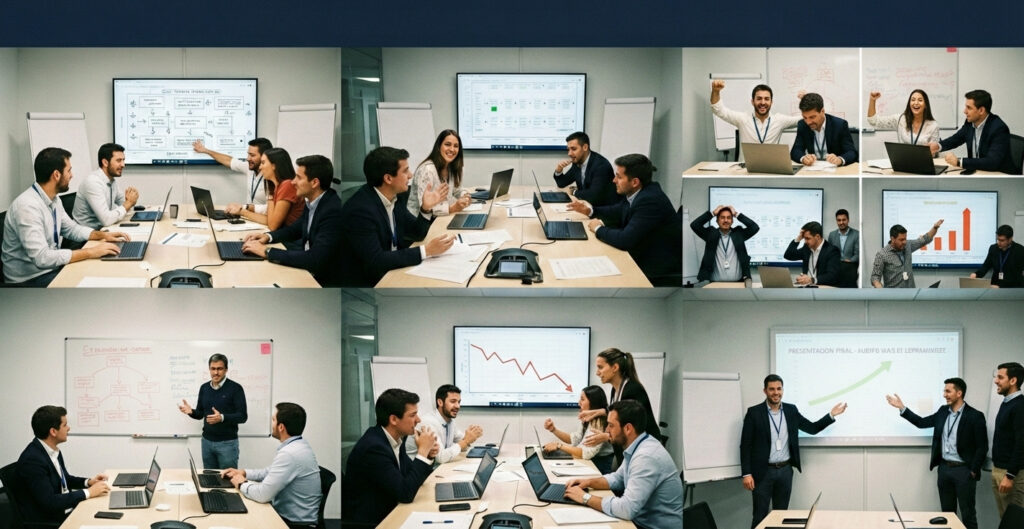
A business simulation exercise is not only an environment for applying technical knowledge. Above all, it is an intense emotional experience that accompanies learning and directly influences decision-making. Understanding the emotional cycle that participants go through allows instructors and facilitators to maximize the educational impact of the simulation and provide more effective learning support.
Throughout a business simulation, several phases can be identified, each associated with predominant emotions and specific risks if they are not properly managed.
Phase 1: understanding the simulator
In this initial stage, participants explore the simulation environment: rules, indicators, variables, and cause–effect relationships. Emotions such as curiosity, uncertainty, and sometimes initial anxiety are common. The main focus is understanding “how the system works” before making relevant decisions.
Phase 2: training
During the training phase, teams begin to make their first decisions, usually without serious consequences. This stage generates a sense of relief and growing confidence. It provides a safe space to experiment, make mistakes, and become familiar with the simulator’s logic before entering more competitive dynamics.
Phase 3: strategic plan development
At this point, a different emotional load emerges. Teams must define a strategy, assign roles, and set shared objectives. Discussions, constructive tension, and expectations about future performance appear. This phase is especially useful for observing leadership, communication, and alignment within the team.
Phase 4: decision rounds
This is the most emotionally intense moment of the simulation. Decisions have real consequences within the simulated environment, and results trigger deep emotional responses:
- Positive results: generate joy, pride, and a sense of validation. The main risk is overconfidence, which can lead to rushed decisions. A key pedagogical recommendation is to anchor emotions in data and rigorous analysis.
- Mixed results: create emotional ambivalence—a combination of hope and concern. The risk lies in mental fatigue and impulsive choices. Brief pauses and structured moments of strategic reassessment are especially valuable here.
- Negative results: lead to frustration, ego threat, and feelings of unfairness. Without proper support, this can result in internal conflict, demotivation, or emotional disengagement. Guided debriefing is essential to transform mistakes into learning rather than judgment.
Phase 5: final report development
In this phase, emotions tend to stabilize. The focus shifts to reflection: making sense of decisions, analyzing results, and building a coherent narrative of the experience. This is a critical moment for consolidating both technical and human learning.
Phase 6: defense before a panel or final presentation
The simulation concludes with a public presentation of the work completed. Emotions related to evaluation, visibility, and reputation emerge: nervousness, pride, and often satisfaction with the journey completed. This phase reinforces key skills such as communication, argumentation, and pressure management.
Synthesis: the complete emotional journey
Business simulations do more than teach business concepts; they foster essential competencies such as emotional self-regulation, teamwork, resilience, and leadership. A holistic view of the emotional cycle allows instructors to intervene more effectively, adapting their guidance to the group’s composition and the specific moment of the simulation.
At CompanyGame, we understand simulation as a comprehensive learning journey in which emotion, reflection, and decision-making combine to create deep and lasting learning, aligned with the real challenges of the business world.